Advertisement
It used to be that artificial intelligence felt like something meant for big tech labs, enterprise teams, or sci-fi movies. Not anymore. Today, anyone with a bit of curiosity and a Wi-Fi connection can build their own network of personal AI agents to help manage daily tasks, make decisions faster, or explore ideas.
Whether you're automating research, optimizing your schedule, or managing personal data more intelligently, AI agents are tools that can be shaped around how you live and work. Building your own network isn't about replacing yourself; it's about creating extensions of your thinking, memory, and focus.
An AI agent, in its simplest form, is a digital assistant that acts based on your input and goals. It can take actions on your behalf, retrieve information, send emails, analyze content, or even hold a conversation. Some are task-specific, like scheduling meetings or summarizing documents. Others are more general, learning over time what you like or need.

When we talk about a personal AI agent network, we’re referring to a group of these agents working together, each trained or configured to handle a specific job, and communicating with each other to get things done. Think of it as a team of virtual helpers, each with its specialty, collaborating behind the scenes.
This setup works well because one agent handling everything tends to get confused or bloated with too many responsibilities. But a network of focused agents? That scales better—cleaner roles, faster results.
To start building your AI agent network, begin by identifying what you want help with. Are you overwhelmed with emails? Do you spend too much time collecting information before making decisions? Maybe you want something to help you generate content ideas, summarize books, manage your time, or remind you to take breaks. Make a list of pain points.
From there, map each task to a potential AI role. For example, a “Research Agent” could be trained to scan the web and give short, readable summaries. A “Memory Agent” could be connected to your personal notes, like a second brain. A “Scheduler Agent” could interact with your calendar and handle meeting requests.
You’ll need a base platform or model to work with. Most people use tools like OpenAI’s GPT models, open-source frameworks like LangChain or Auto-GPT, or platform-specific services like Replit, Hugging Face, or AgentGPT. These give you the backbone to create AI agents with memory, decision logic, and automation abilities.
Your next step is training. For general-purpose tasks, you might not need to “train” a model in the traditional sense. Instead, you provide prompt engineering—writing structured instructions for what the agent should do. Think of this as shaping its personality, tone, and focus. Some tools allow more advanced fine-tuning or plugin integrations.
Storage is another part of the foundation. Many AI agents need long-term memory to work effectively. That might mean connecting to a note-taking app, database, or vector store that holds your past inputs, preferences, or project data. The better your agents can recall past context, the more useful they’ll become.
Once you’ve built or set up a few standalone agents, the real power comes in making them work together. This can happen in two ways: explicitly and implicitly.

Explicit connections happen when you program the agents to talk to each other. For example, your “Email Agent” might pass summary data to your “Task Manager Agent,” which logs action items or deadlines. You could set this up using a local server, cloud functions, or agent orchestration frameworks.
Implicit connection means they're working with a shared context. If all agents pull from the same note archive or project tracker, they stay in sync without direct communication. This method is simpler and often easier to maintain.
Whichever method you choose, the key is defining clear inputs and outputs for each agent. Don’t let them overlap too much. Give each one a clean, focused purpose and avoid “jack of all trades” agents. If your research agent starts trying to manage your inbox too, it’ll quickly break down.
Coordination is often handled through a central controller—think of this like a traffic director. It routes tasks to the right agent and aggregates the results. This could be a simple script, a chatbot interface, or a workflow manager. With the right interface, you can “talk” to your entire agent network in one conversation, while each piece operates in the background.
Once your personal AI agent network is running, the real challenge isn’t the tech—it’s using it well.
The real value of an agent network isn’t just automation. It’s insight. These tools can uncover patterns in your habits, highlight blind spots, or offer solutions you wouldn’t have considered. But they only help if you use them thoughtfully.
Start with small, low-risk tasks. Let your agents handle research, reminders, or drafts—not full decision-making yet. Observe how they work, give feedback, and refine their prompts and rules.
Treat your AI network as a growing system, not a static one. Update it often. Add new roles when needed and retire agents that stop being useful. Keep a log of what you’ve built, how it connects, and what it does.
Privacy and ethics matter too. Your agents may handle sensitive data, so consider encryption, access controls, and offline storage when possible. Avoid connecting them to public services or giving open access to personal accounts.
Decide how much autonomy you’re comfortable with. Some prefer networks that make recommendations, leaving final decisions to the user. Others let their network manage emails, bookings, and analysis with little supervision.
Neither is wrong; it depends on your trust, needs, and risk tolerance. But always know what’s happening under the hood.
Building a personal AI agent network is no longer just for tech experts. With the right tools, you can create a team of digital helpers that streamline your day and adapt to your style. Each agent has a clear purpose, and together they simplify tasks, boost productivity, and make everyday work smoother and more efficient.
Advertisement
How Salesforce’s Agentic AI Adoption Blueprint and Virgin Atlantic’s AI apprenticeship program are shaping responsible AI adoption by combining strategy, accountability, and workforce readiness
Explore the key features, benefits, and top applications of OpenAI's GPT-4.1 in this essential 2025 guide for businesses.

Explore the real-world differences between Claude AI and ChatGPT. This comparison breaks down how these tools work, what sets them apart, and which one is right for your tasks

How the latest PayPal AI features are changing the way people handle online payments. From smart assistants to real-time fraud detection, PayPal is using AI to simplify and secure digital transactions
Explore how generative AI in financial services and other sectors drives growth, efficiency, and smarter decisions worldwide
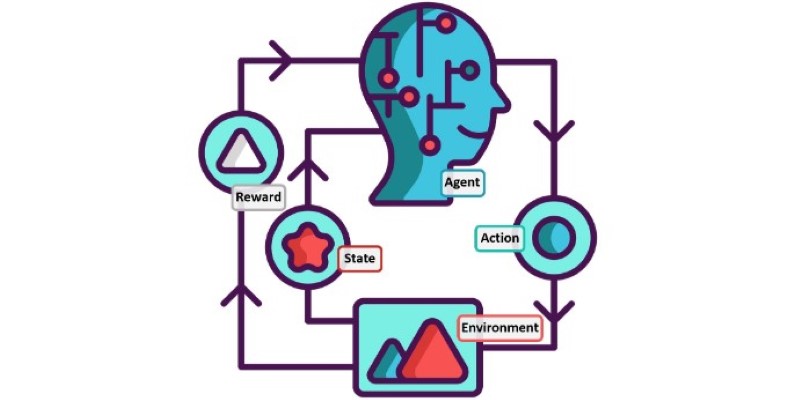
Confused between lazy learning and eager learning? Explore the differences between these two approaches and discover when to use each for optimal performance in machine learning tasks

Discover how ByteDance’s new AI video generator is making content creation faster and simpler for creators, marketers, and educators worldwide

How to build your personal AI agent network from the ground up. Discover practical ways to connect, train, and coordinate multiple AI agents to simplify daily work, manage information, and create a more efficient digital support system
New to neural networks? Learn the top 3 things you must understand before you begin. This guide explains how neural networks work, why data matters, and what to expect from these learning systems

Understand what machine learning (ML) is, its major types, why it is so important, how it works, and more in detail here

Want OpenAI-style chat APIs without the lock-in? Hugging Face’s new Messages API lets you work with open LLMs using familiar role-based message formats—no hacks required

Can AI actually make doctors’ jobs easier? Microsoft just launched its first AI assistant for health care workers—and it's changing the way hospitals function