Advertisement
OpenAI's GPT-4.1 is the next milestone in artificial intelligence, offering enhanced language understanding, reasoning, and generation capabilities. This advanced model offers enhanced contextual accuracy, faster response times, and a deeper understanding of nuanced topics, all while supporting a wide range of real-world tasks.
As organizations continue to adopt AI-driven solutions to stay ahead of the curve, understanding GPT-4.1's core capabilities, performance improvements, and real-world value becomes essential for staying ahead in 2025 and beyond. In this article, we explore what GPT-4.1 is, its examples, and its top features, benefits, applications, and future use cases.
GPT-4.1 is a multimodal large language model developed by OpenAI, building on the success of GPT-4. It features improved comprehension, longer context retention, better multilingual capabilities, and enhanced alignment with user instructions. The model is designed to support more complex tasks with greater accuracy, making it a valuable tool for businesses, educators, developers, and creative professionals seeking to harness AI for smarter outcomes.
GPT-4.1 isn't just theory—it's actively powering more innovative solutions across industries. Here are real-world scenarios showing its practical impact.
Academic Support: GPT-4.1 can help students summarize lectures, solve mathematical problems, and generate thesis ideas and references. It also assists with structuring essays, translating academic material, and offering guidance on citation formats, saving students countless hours of manual research and writing efforts.

Business Automation: GPT-4.1 assists in generating reports, analyzing trends, drafting emails, and handling customer inquiries automatically. Additionally, it can create meeting summaries, automate repetitive documentation tasks, and extract actionable insights from large datasets, enabling more intelligent business decisions.
Content Creation: Writers and marketers use GPT-4.1 to brainstorm blog topics, generate outlines, and create full-length articles within minutes. It can adapt tone, format, and complexity to different audiences, generate SEO-friendly titles and metadata, and enhance creativity through idea expansion and storytelling techniques.
What makes GPT-4.1 stand out? The following features set a new benchmark in AI performance and usability.
Multimodal Capabilities: Supports both text and image input, allowing users to describe or query content using visual and verbal formats for more accurate responses. This is particularly helpful in fields such as healthcare, design, and engineering, where visual references can significantly enhance context and clarity.
Longer Context Window: GPT-4.1 can remember and analyze larger chunks of information (up to 128K tokens), ensuring consistency and relevance in long conversations or documents. This enables it to handle entire books, legal transcripts, or lengthy customer service logs without losing continuity or detail.
Improved Reasoning: Enhanced logical and mathematical reasoning enables the solution of more complex queries and yields more reliable outputs for research and professional tasks. GPT-4.1 performs better at analyzing financial projections, explaining algorithms, and tackling scientific hypotheses with accuracy and coherence.
Fine-Tuned Alignment: Better adherence to user instructions yields more context-aware, ethically aligned, and actionable responses across various domains and languages. This ensures safer outputs, reduces biased interpretations, and supports tasks ranging from sensitive communication to brand-compliant marketing content.
From personal use to enterprise-level operations, GPT-4.1 delivers clear, measurable advantages. Here's how it empowers users at every level.
Increased Productivity: Automates repetitive tasks, saving time in research, documentation, writing, and communication in both personal and business settings. Teams can focus on innovation and critical thinking while GPT-4.1 handles routine follow-ups, meeting notes, content drafts, and summarization tasks with efficiency.
Cost-Efficiency: Reduces the need for multiple software tools or workforce for routine tasks like customer support, content generation, or data analysis. Organizations can reallocate resources, optimize workforce costs, and reduce third-party tool subscriptions by integrating GPT-4.1 into their operations.
Enhanced Accessibility: GPT-4.1 democratizes access to knowledge by providing support for users with disabilities or limited technical skills, thereby improving digital inclusivity. Features like voice-to-text, simple language transformation, and contextual guidance make it an empowering tool for a broader audience.
Better User Experience: Delivers smoother, more natural conversation with improved contextual memory and fewer hallucinations, ensuring trust and reliability. Whether embedded in customer service, education apps, or interactive games, it offers responses that feel human, accurate, and intuitive.
GPT-4.1 is not confined to just one domain—it's versatile across many industries. Below are the key areas where it delivers high-impact solutions.
Education: Custom lesson plans, tutoring for diverse subjects, automated feedback on assignments, and foreign language translation help students and teachers alike. Educational institutions use GPT-4.1 to facilitate hybrid learning, generate interactive content, and support personalized learning journeys.
Healthcare: GPT-4.1 can help organize patient records, provide administrative support, and assist in preliminary symptom analysis, all while ensuring patient confidentiality and privacy. It enables healthcare professionals to reduce paperwork, improve diagnostic accuracy, and deliver better patient communication.
Customer Service: AI chatbots built on GPT-4.1 can resolve issues faster, handle multiple queries, and personalize responses in real time. These bots can maintain conversation logs, adapt to tone, escalate when needed, and dramatically reduce response times during peak periods.
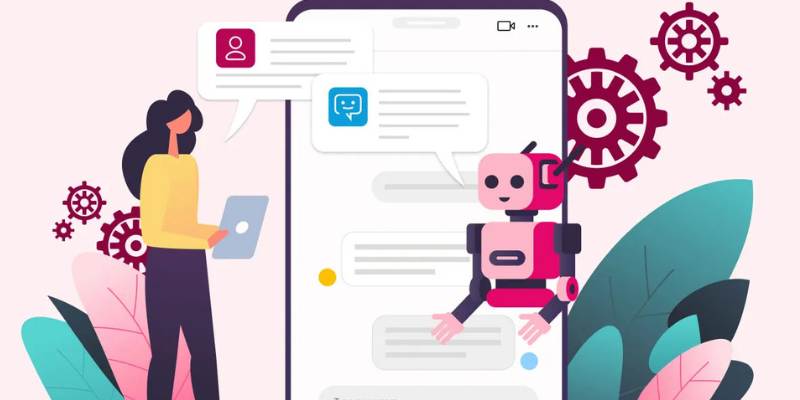
Software Development: Acts as a pair programmer, suggesting solutions, improving code readability, and helping with documentation for better team collaboration. Developers benefit from automated testing script generation, API documentation, and support for DevOps tasks.
From streamlining operations to enhancing user experience, GPT-4.1 is revolutionizing industries in real-time. Here are some specific use cases that are already making waves.
Retail and E-Commerce: Enhances customer engagement via personalized recommendations, automated product descriptions, and targeted marketing copy generation. Retailers utilize GPT-4.1 to localize campaigns, maintain consistent branding, and optimize product pages for search engine optimization (SEO) purposes.
Human Resources: Streamlines hiring with resume screening, candidate communication, and even drafting job descriptions or onboarding material. GPT-4.1 also provides DEI-friendly content suggestions, maintains inclusive language, and ensures role descriptions are clear and unbiased.
Media & Publishing: Assists in scriptwriting, social media planning, editing, and generating dynamic headlines for audience engagement. Journalists and editors use it to meet deadlines, brainstorm interview questions, and ensure stylistic consistency across content types.
OpenAI's GPT-4.1 represents a significant leap forward in intelligent automation, creative assistance, and professional support across various industries and sectors. With powerful features such as multimodal inputs, deeper reasoning, long-term memory retention, and enhanced accessibility, GPT-4.1 provides a truly transformative experience for users across the board.
Whether you're an entrepreneur, educator, developer, or content creator, this model brings unmatched potential to streamline your work, reduce costs, and spark innovation. Embracing GPT-4.1 now means staying competitive, future-ready, and aligned with the next wave of technological evolution. Don't miss out—start exploring how GPT-4.1 can elevate your workflows, boost productivity, and empower your digital journey in 2025 and well into the future.
Advertisement

How Salesforce’s Agentic AI Adoption Blueprint and Virgin Atlantic’s AI apprenticeship program are shaping responsible AI adoption by combining strategy, accountability, and workforce readiness
Turn open-source language models into smart, action-taking agents using LangChain. Learn the steps, tools, and challenges involved in building fully controlled, self-hosted AI systems
Explore Apple Intelligence and how its generative AI system changes personal tech with privacy and daily task automation
Explore how generative AI in financial services and other sectors drives growth, efficiency, and smarter decisions worldwide

GenAI helps Telco B2B sales teams cut admin work, boost productivity, personalize outreach, and close more deals with automation

Looking to build practical AI that runs at the edge? The AMD Pervasive AI Developer Contest gives you the tools, platforms, and visibility to make it happen—with real-world impact
Explore the key features, benefits, and top applications of OpenAI's GPT-4.1 in this essential 2025 guide for businesses.

AI in Travel is changing the way people explore the world. Discover 19 real examples of how artificial intelligence improves planning, customer service, pricing, and personalization in modern tourism

Can AI actually make doctors’ jobs easier? Microsoft just launched its first AI assistant for health care workers—and it's changing the way hospitals function

What happens when Nvidia AI meets autonomous drones? A major leap in precision flight, obstacle detection, and decision-making is underway

What loss functions are, why they matter, and how they guide machine learning models to make better predictions. A beginner-friendly explanation with examples and insights
How far can AI go when it comes to problem-solving? Google's new Gemini model steps into the spotlight to handle complex tasks with surprising nuance and range